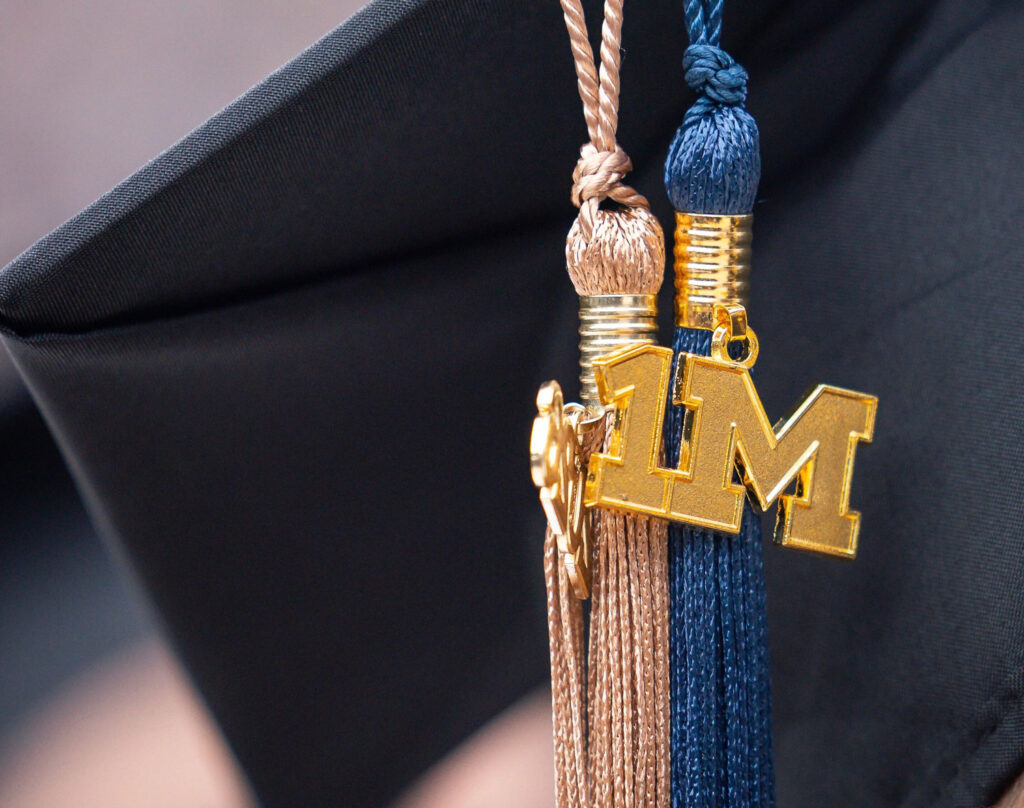
The University of Michigan granted its one millionth degree this spring—a testament to its legacy of developing leaders through education, and a milestone in its mission to serve the people of Michigan and the world.
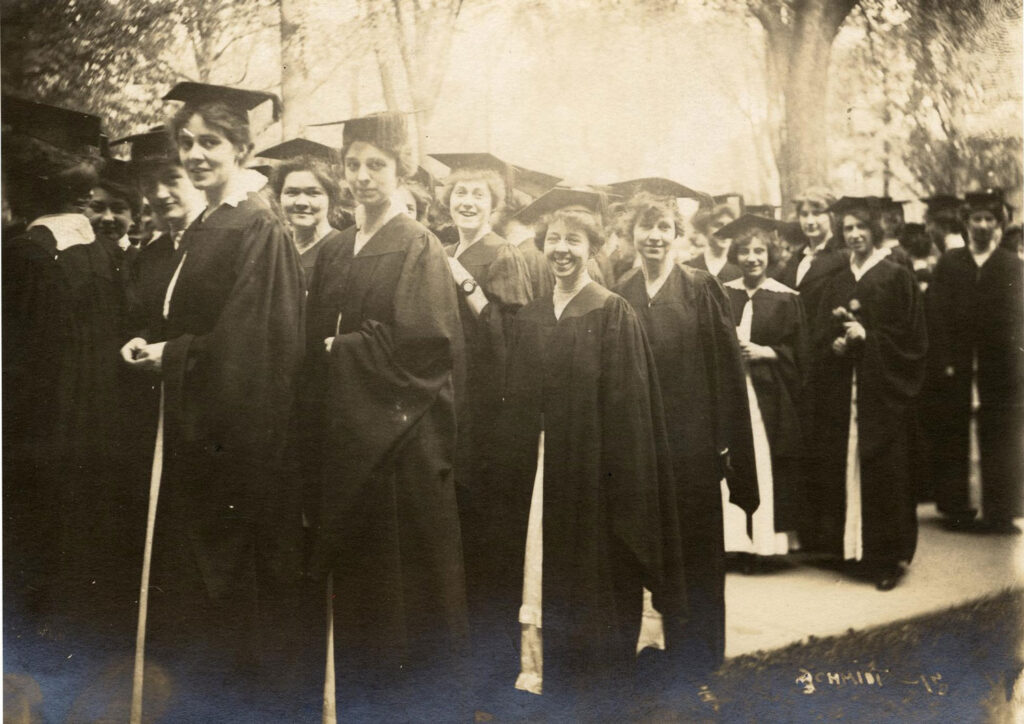
The first 11 Michigan graduates had limited choices for pursuing a college degree as there were just three universities operating in the state in 1845. Today’s college learners navigate a very different world, with thousands of institutions nationwide and a vastly expanded array of academic programs—267 undergraduate and 421 graduate and professional degree programs at U-M alone.
Michigan’s tradition of innovation and excellence has spurred its growth since its founding. As the university looks ahead to the next million degrees, the Center for Academic Innovation (CAI) is supporting further innovations in academic programs and learning experiences. Together with faculty leaders, the center is ushering in new pathways for students to, through, and beyond a Michigan degree.
Innovating the Degree Program
While the university continues to prioritize world-class residential programs, the past two decades have seen Michigan introduce online and hybrid degree programs that live up to this standard of excellence. Online degree programs provide opportunities to reach students in the state of Michigan and beyond that traditional program structures don’t serve well. Many of UM-Ann Arbor’s 18 online degree programs are designed to serve working professionals seeking to deepen their expertise, or pivot in a new direction, and who require the flexibility that online education provides.
The center provides resources to support the development of new online degree programs through the university’s Academic Innovation Fund (AIF). Recently supported programs include the online Master of Arts in Leading Educational Innovation and Transformation from the Marsal Family School of Education, which is 100% online and almost entirely asynchronous, allowing students to complete the courses on their own time.
For students who want more in-person experiences, there are hybrid degree options like the Ford School of Public Policy’s Online Master of Public Affairs, which launched last fall with support from CAI and welcomes students to Ann Arbor for two on-campus residencies, and the Ross School of Business’ Online Master of Business Administration. The School of Social Work offers full- and part-time paths for its online Master of Social Work students, allowing learners to pursue their degrees without disrupting their lives.
Online learning experiences can also help faculty meet learning goals in residential courses. Michigan Online’s online learning experiences, created by U-M faculty and CAI, are increasingly being adopted by U-M faculty to support or complement residential instruction. The center’s recent AIF project awards include support for faculty integrating online non-credit course content into residential for-credit classes. Through such integrations, faculty can provide learners supplemental instruction and, in many cases, the ability to earn a credential to add to their resume.
New Pathways Into and Beyond Degrees
Prospective students today are not just navigating new degree program options, they are also facing evolving workforce expectations and increasing pressure to develop new skills throughout their lives and careers. A University of Michigan degree remains as valuable and transformative as ever—but the ways learners expect to discover, access, and return to education across different stages of life, career transitions, and changing personal goals are evolving in important ways. The center is partnering with academic units to develop academic portfolios that support this spectrum of learning over a lifetime, including flexible pathways into and beyond degree programs.
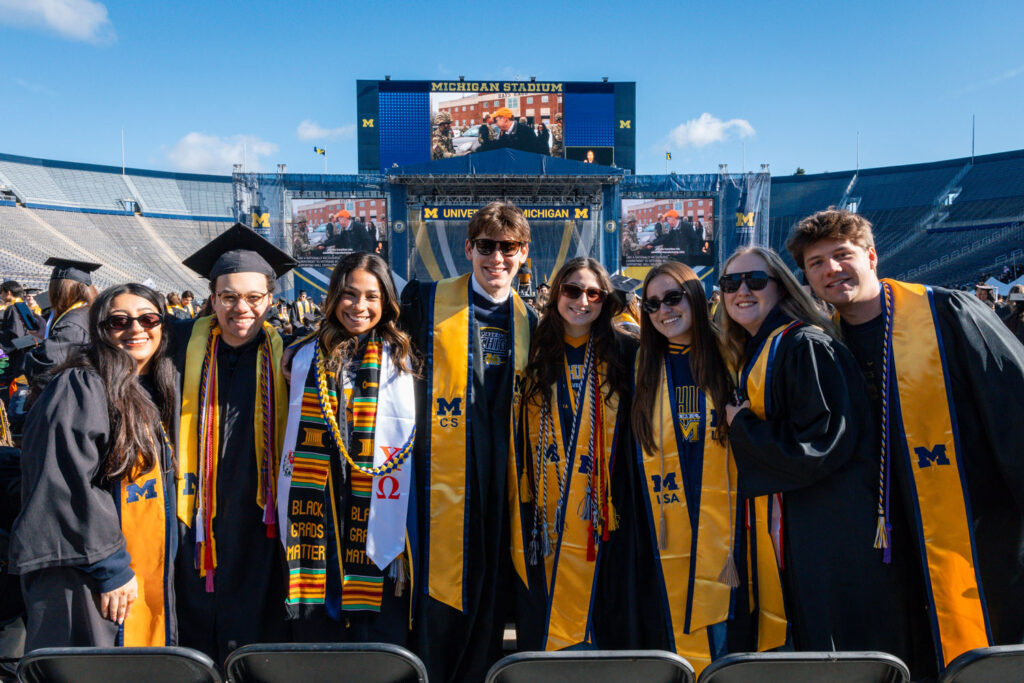
Online self-paced courses and certificate programs that offer skill-building in topics relevant to an online degree can represent important pathways into that degree program for learners. Michigan Online is home to many such online courses, which have generated over 22 million enrollments from nearly 13 million learners to date.
A case in point: learners interested in studying data science can earn a standard placement waiver if they complete one of three Michigan Online open online course series on data science with Python developed by U-M School of Information faculty with support from CAI. With the waiver, applicants can skip the standard placement test for the online Master of Applied Data Science (MADS) program.
The recently launched Data-Oriented Python Programming and Debugging series on Michigan Online also prepares learners for the program’s advanced placement test. If learners earn advanced placement, they will enter the MADS program with four credits awarded toward the 38-credit degree. In this way, such pathway courses not only build valuable skills, but may also reduce the cost of a master’s degree.
Once matriculated into a degree program, all Michigan students and alumni have free access to a catalog of over 300 U-M open online courses and Google Career Certificates through Michigan Online allowing them to continue building skills over their career.
Maureen Breslin, director of online program operations at the center, oversees a team helping to bring many of these new online degree programs and learning pathways forward.
“People’s jobs will keep changing and evolving, and therefore, we are reinforcing the idea that we will never stop learning,” Breslin said. “And that’s the lifelong learning piece of it.”
Applying Innovative Technologies
Keeping pace with the ways in which technology can enhance teaching and learning is another priority for the center, and that means exploring the impact and potential of artificial intelligence.
Through the university’s AIF, the center is supporting 13 faculty-led projects that will test how AI can improve teaching and learning, and better support student success. The proposals will examine a range of topics, including use of GenAI tools and chatbots, simulation experiences, and personalized tutors.
Julien Depauw, director of the edtech accelerator at the center, said he is excited by the expanding world of higher education and the potential for harnessing the power of innovation.
“CAI is working closely with faculty innovators to explore how innovative technologies like AI and extended reality can be deployed responsibly within courses to enhance students’ learning,” Depauw said.
Embracing the potential of technology is another way the center and its U-M partners will shape the future of degree programs and more at Michigan and support learners at multiple stages of their lives. The path to Michigan remains strong thanks to the university’s growing catalog of lifelong, and life-changing, opportunities.