Founder of Grow with Google discusses the future of education and the importance of industry and higher education working together
Sean Corp, Communications Lead
There is a vision for higher education that combines the enduring strengths of human-centered learning with the affordances of technology, enabling people to thrive throughout their lives. That perspective was shared by both James DeVaney, the founding executive director of the University of Michigan Center for Academic Innovation, and Lisa Gevelber, the founder of Grow with Google.
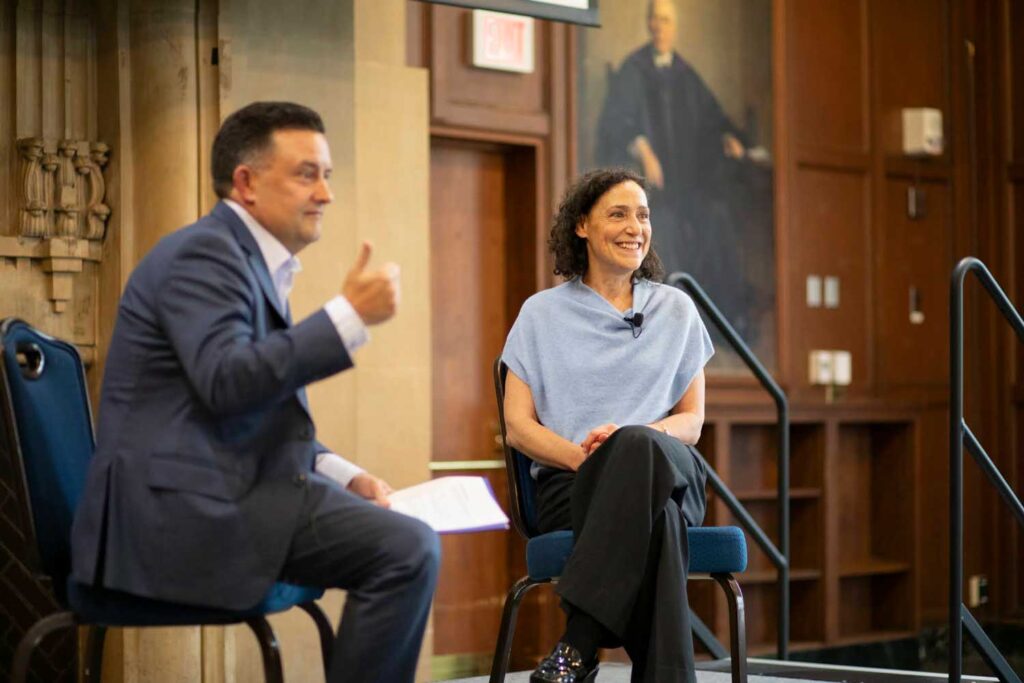
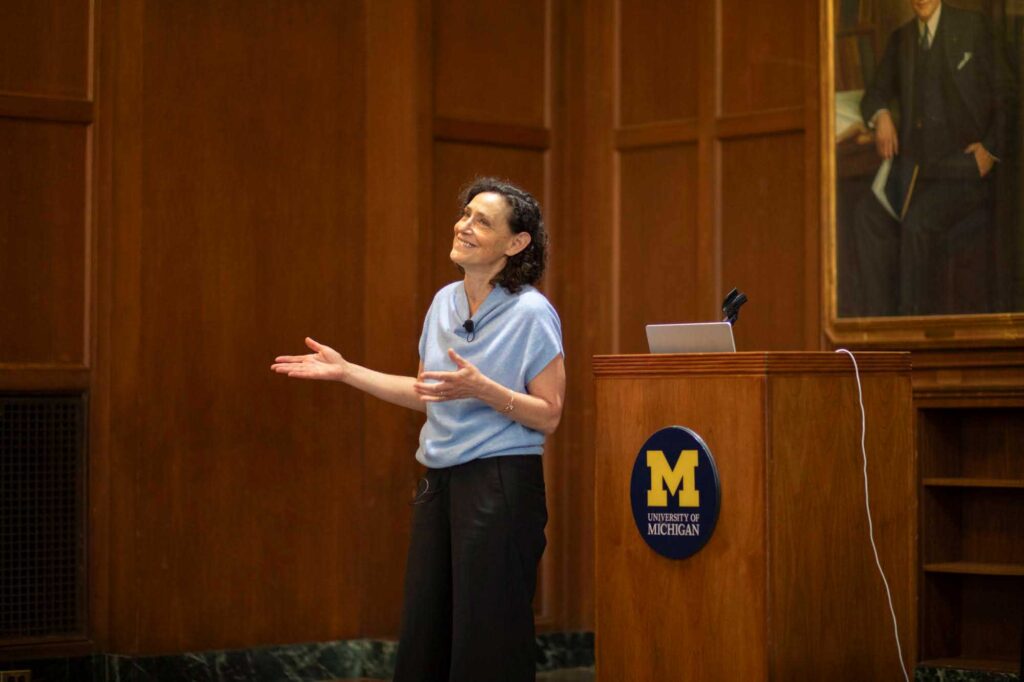
That perspective was shared during a recent keynote conversation between James and Lisa to a room of educators, technologists, and innovators as part of the center’s Online Learning Showcase in October. Gevelber, a U-M alum, whose Grow with Google educational initiative has helped more than 12 million Americans grow their skills and careers since 2017, served as the keynote speaker at the showcase.
Her talk, and a discussion with DeVaney afterward, centered not on technology for its own sake, but on how partnerships between universities and industry can expand access, create relevant learning opportunities, and prepare individuals for a future where continuous upskilling is the norm.
Education That Evolves With Learners
Gevelber framed the transforming workforce as an inflection point for both higher education and the corporate world. Artificial intelligence, she noted, is changing how people learn, work, and create—but its greatest potential lies in empowering people, not replacing them.
“It’s not about what AI can do, it’s about what people can do with AI,” she said. “The real magic happens when we combine human creativity and curiosity with the right tools.”
But getting to that place requires us to ensure we are creating learning opportunities that won’t see people left behind. That is why Google leaned into creating educational opportunities around AI skills with its AI Essentials courses. The center has also focused on AI upskilling, developing more than 30 courses focused on AI skills in the past three years, all available on Michigan Online.
The university and Google aren’t simply acting in parallel. Over the past several years, Google and the center have collaborated to create a Michigan Online course series that builds on Google certificates, teamed up to provide U-M students, faculty, and staff free access to Google Career Certificates and the AI Essentials courses, and most recently joined the Google AI for Education Accelerator partnership that offers U-M students, faculty, and staff no-cost access to Gemini and Notebook LM.
Together, U-M and Google are exemplifying what it looks like when a top research university and a global technology company create learning ecosystems that serve both campus and community, and the impact of a partnership built around this shared vision.
Rethinking the Role of Higher Education
The keynote conversation underscored that universities remain essential because they cultivate the human skills that endure: critical inquiry, empathy, collaboration, and ethical reasoning. Those abilities, when integrated with modern technical fluency, make graduates adaptable in a rapidly changing world.
“The most powerful combination is the human skills you teach and the technology skills we build together,” Gevelber said.
DeVaney underscored the power of synergy between the robust institutions of learning and the industry leaders putting theory and skill into practice in dynamic ways relevant to today’s job market.
“There’s been a lot of debate about whether higher ed prepares graduates for today’s jobs. What excites me is working with partners like Google who don’t aim to replace universities, but to collaborate deeply and help us position for the future.”
For universities like Michigan, this means embracing partnerships that bring industry relevance into academic design while maintaining the rigor, inclusivity, and research foundation that define higher education. For companies like Google, it means ensuring that learning opportunities are open, flexible, and accessible, so that people from every background can participate in the always-changing digital economy.
Gevelber described Grow with Google’s “job-back” approach to curriculum design—starting with real employer needs, then building courses and assessments that equip learners with those competencies. By collaborating with universities, she argued, Google and institutions can help create a continuum of learning that begins on campus but continues throughout a person’s life.
Many learners balance full-time jobs, caregiving, and unpredictable schedules. Flexible, on-demand education, like the experiences built by Michigan Online and Grow with Google, helps remove barriers for these individuals, turning lifelong learning from an aspiration into a reality, DeVaney said.
The Path Forward Together
The partnership between the University of Michigan and Google reflects a shared commitment to the idea that education should not be confined to a degree or even a classroom. Instead, it should connect and empower learners everywhere, adapting to changing technologies and never losing sight of the human skills required of exceptional workers and leaders.
While much is required of the world’s leading educational institutions and industries to ensure workers are well-equipped for the future of work across industries, it always comes down to people, Gevelber said.
“When people have access to technology, it’s not the technology that does amazing things—it’s the people who do.”