Center spent much of 2025 making enhancements to hundreds of courses available on Michigan Online to better serve learners
Sean Corp, Communications Lead
For more than a decade, the Center for Academic Innovation has been at the forefront of creating accessible online learning opportunities for people worldwide. To date, more than 12 million learners have enrolled in an open online course developed by the University of Michigan. While the university’s catalog, available via Michigan Online, has expanded to include over 300 unique courses, there is just as much care and attention devoted to supporting existing learning experiences as to creating new ones.
That was never clearer than in 2025, when the center embarked on an ambitious journey to review Michigan Online’s catalogue of open online courses and update them to enhance the learning experience today and into the future.
The center undertook a three-part effort that always had learners’ needs at the forefront. More than a routine refresh, the work moved on three parallel tracks: accessibility remediation across the portfolio, replication of courses into Canvas to create a more flexible learning environment that best served learners, and exploring optimization strategies to test design changes that could improve learning outcomes.
“It was more than a year-long project that required contributions from nearly every team at the center,” said Clare Brown, a project manager at the center leading the coordination of all three dreams.
While the time and effort investment was intensive, it was important to the long-term strategic goals of the center, providing a foundation for the next chapter of delivering life-changing education from the University of Michigan.

“This work allows us to grow, adapt, and respond to learners’ needs,” said Sarah Dysart, chief learning officer at the center. “By investing deeply in accessibility, flexibility, and evidence-informed design, we’re ensuring that Michigan Online is positioned to deliver meaningful impact for millions of learners, today and well into the future.”
While the work was happening in parallel, it can be broken down into three distinct phases.
Phase 1: Remediation and accessibility improvements across the portfolio
The remediation across the course catalog was not only imperative to serve all learners, it also advanced the university’s efforts to meet new federal digital accessibility guidelines.
The overarching goal was to prioritize high-impact accessibility improvements to remove barriers and enhance educational access and equity for all learners.”
Pam Saca, continuous improvement specialist, and Caroline Damren, accessibility coordinator, led a comprehensive accessibility audit of Michigan Online’s open online courses, which began in May 2024. To keep scope realistic and impact high, they kept a learner-centered question at the heart of every decision: which improvements would make the biggest difference right now? After beta testing the audit on the 10 highest-enrolled courses, they scaled up to review more than 250 Michigan courses hosted across Coursera and edX, completing the review by July 1, 2024.
Accessibility
Improvements
Learn the detailed approach Pam and Caroline took in their audit and remediation of materials at Online Teaching.
The findings mapped to familiar pain points for learners using assistive technologies: headings used for styling rather than structure (disrupting screen reader navigation), non-descriptive hyperlinks like “click here,” missing or poor alt text, and untagged PDFs, including lecture slide decks offered for download. Older courses generally showed more barriers, while newer courses reflected improved accessibility awareness, training, and practices.
For the majority of 2025, the center’s teams moved from audit to remediation. They tackled quick fixes first—improving in-platform formatting with properly tagged headers, writing descriptive hyperlinks, adding meaningful alt text, and updating accessibility statements in syllabi, including a way for learners to report barriers. Then they took on more technically complex work, such as remediating documents, lecture slides, and PDFs.
“Remediation required prioritization and constant learner-centered decision-making,” said Saca. “While the work was challenging, it ultimately strengthened both the courses and our internal accessibility practices moving forward.”
The remediation work also included forward-looking design decisions. That included converting inaccessible PDFs into a platform-compatible reading format, archiving redundant or outdated materials, and leveraging alternate formats that could provide learners with more than one path to the same content.
Phase 2: Replicating courses into Canvas for a more flexible learning space
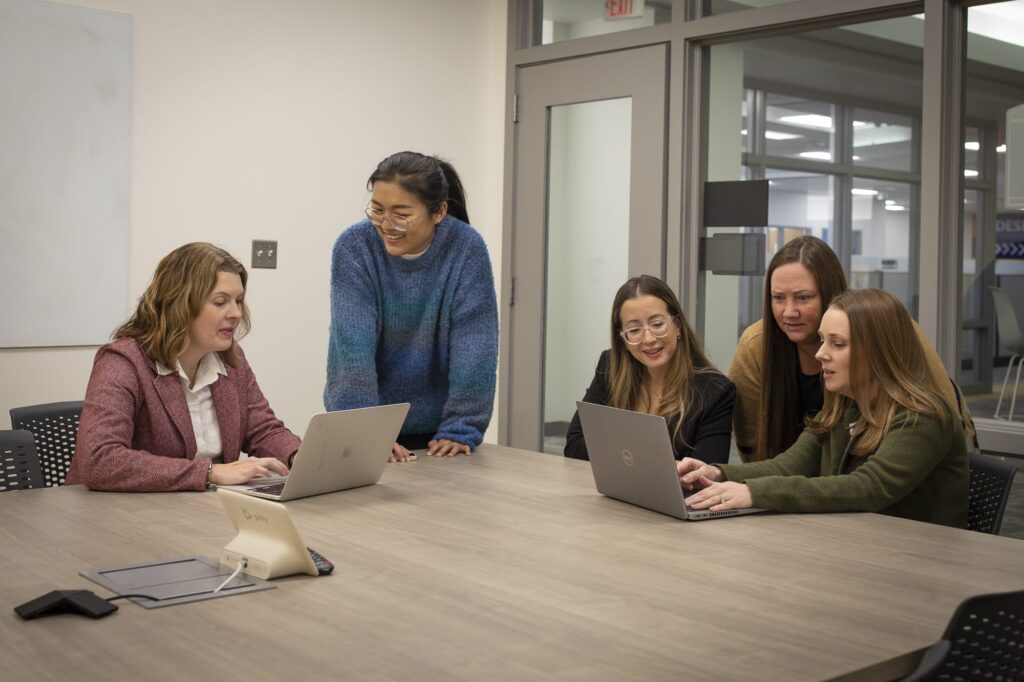
The second track is still in active development, but could pay huge dividends for learners. The center undertook transcreating its entire catalog in a new learning management system to allow learning experience designers and faculty more direct control and flexibility when designing courses.
The center chose Canvas, a tool already in use by faculty and the enrolled students at U-M. Previously, the center exclusively hosted non-credit courses on external platforms such as Coursera and edX, and designed courses to meet the specifications of those systems. The introduction of Canvas as a platform option introduces more flexibility and functionality, opening new ways for learners to access and progress through courses. It also allows more unique learning experiences in individual courses in the catalog to support learning goals.
Achieving this meant the job was not simply a matter of copying and pasting existing content into a new platform.
“Our team of amazing learning experience designers really thought intentionally about how best to design the course in Canvas so the material can best serve the learner,” Brown said.
To manage the scale, the team developed a repeatable workflow: exporting existing content into a structured Google Doc template, reconfiguring the course while allowing feedback and input from the center’s learning design team, and then building the course in Canvas using a standardized HTML template that kept navigation and visuals consistent. After replicating approximately 30 courses internally, the center scaled the remaining builds with an external partner, OES, and a structured review process that combined QA and beta testing.
It was a daunting effort, and Brown said the sheer scale of what was being attempted felt like it might be impossible. But she recalled a meeting where it seemed like everything flipped.
“We had worked so hard putting plans in place, and there were some definite ups and downs, but then there was a moment where it was clear everyone understood the path ahead and were executing at a high level. All the thoughtful work in designing the workflows, review systems, and quality control checks were paying off and courses were turning around extremely quickly. At that point, we knew we could achieve our goal.”
Phase 3: Optimizing courses to explore stronger learning outcomes
Remediation focused on removing barriers to learning in existing courses, and phase two focused on replicating courses into a flexible learning management system. The final phase asked a different question: how can intentional course design changes improve the learning experience—and potentially learning outcomes—once learners are engaged?
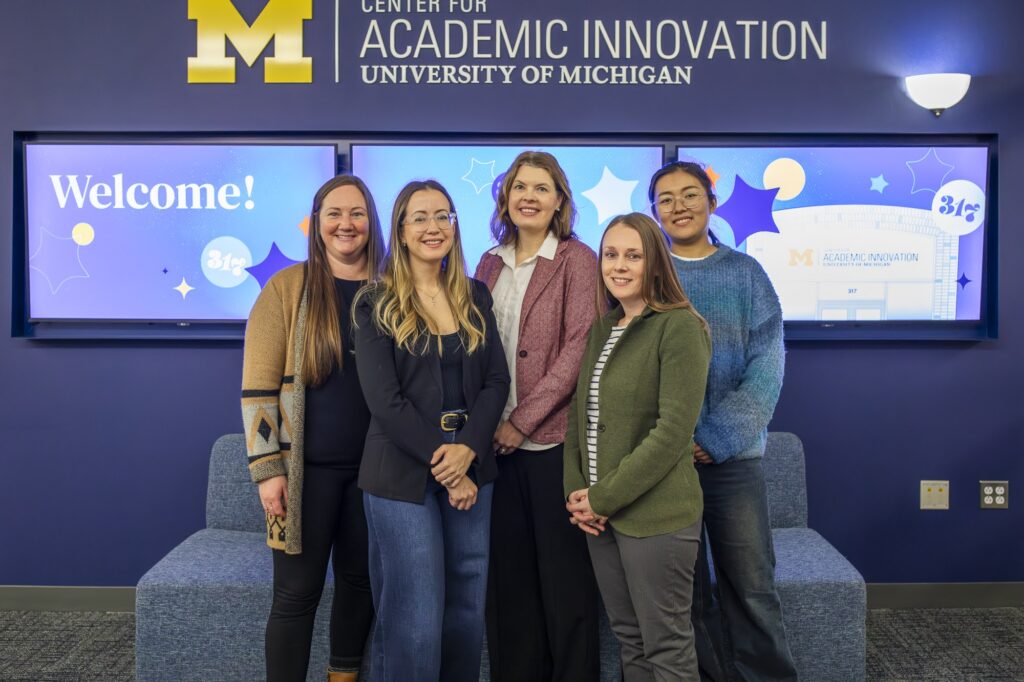
More importantly, how could the center test their changes and see if they were having the desired impact? Another team at the center, led by Saca and Weiyi Zhang, learning experience designer senior, examined 10 of U-M’s most popular open online courses, re-evaluated them using learning analytics data, and implemented design and assessment improvements.
It started with taking a closer look at completion funnels, Brown said. Center staff were able to identify precise moments in a course when learners started disengaging. Instead of making broad, generic changes, they created item-by-item recommendations designed to strengthen flow, improve clarity, and keep learners moving from concept to practice.
“Learning design is inherently an iterative process,” Zhang said. “Each design decision we made was grounded in how learners actually experience a course, not just what instructors intended to teach,” Zhang said. “By closely examining where and why learners disengage or underperform, we can make more targeted, data driven changes that reduce frictions, support retention over time, and enable learners to build knowledge and skills with greater confidence.”
Some adjustments were simple but significant. In one course, a 28-minute interview video aligned with a notable drop-off point. The fix was to split the long video into multiple shorter segments at natural transition points, paired with concise text overview, clearer section titles, and more intentionally spaced content, with the help of media designers. For learners, that kind of redesign can reduce cognitive fatigue, support sustained attention and re-entry after interruptions, and create a clearer sense of progress through a module.
Other improvements targeted structure and feedback. Brown said the team added learning objectives in courses where they were missing, helping learners understand what each activity is for and how pieces connect. They also improved quizzes with elaborative feedback, giving learners explanations when answers are incorrect, not just a score.
It was also important that the center consider when and how best to engage with faculty on any potential changes, Dysart said.
“While we used data to spot potential improvements that did not materially change the design of the course, but when there were opportunities for more substantive changes, like with our optimization efforts, we engaged with instructors and involved them in a way that served the course and the instructors’ other responsibilities,” she said.
To evaluate whether the bundle of changes actually improved learner experience, the team implemented A/B testing in six courses, randomly routing learners into either the original or the optimized version. The goal, Brown said, was to measure the optimized version “in whole,” using engagement and funnel data rather than relying on anecdotes. The center will be evaluating that data over the next several months and will engage with instructors on further data-informed updates.
Taken together, the 2025 effort reflects a layered strategy for better online learning: remove barriers (remediation), improve instructional clarity and engagement (optimization), and create a flexible, coherent course learning environment (replication). Brown’s role, she said, often came down to “a curated list of things that people needed to worry about,” so the right teams could focus on the right course elements at the right time.
For learners, the intended effect is even simpler: fewer obstacles, clearer pathways, and courses that feel built for real life—designed not just to be available online, but to be usable, navigable, and genuinely supportive of lifelong learning.
“Taking on a major challenge like this is complicated to execute, but the reasons it is important are clear. We have to work to ensure we are respecting learners’ time, goals, and lived realities,” Dysart said. “When courses are accessible, thoughtfully designed, and responsive to how people actually learn, we remove unnecessary hurdles and open the door to greater engagement with lifelong learning.”