Distinguished leaders discuss why higher ed should lead the AI conversation–or risk having AI’s role defined for them
As artificial intelligence continues to permeate higher education, three longtime campus leaders pointed to universities as the ideal environment to harness the technology’s potential and guide its use toward a powerful and beneficial future.
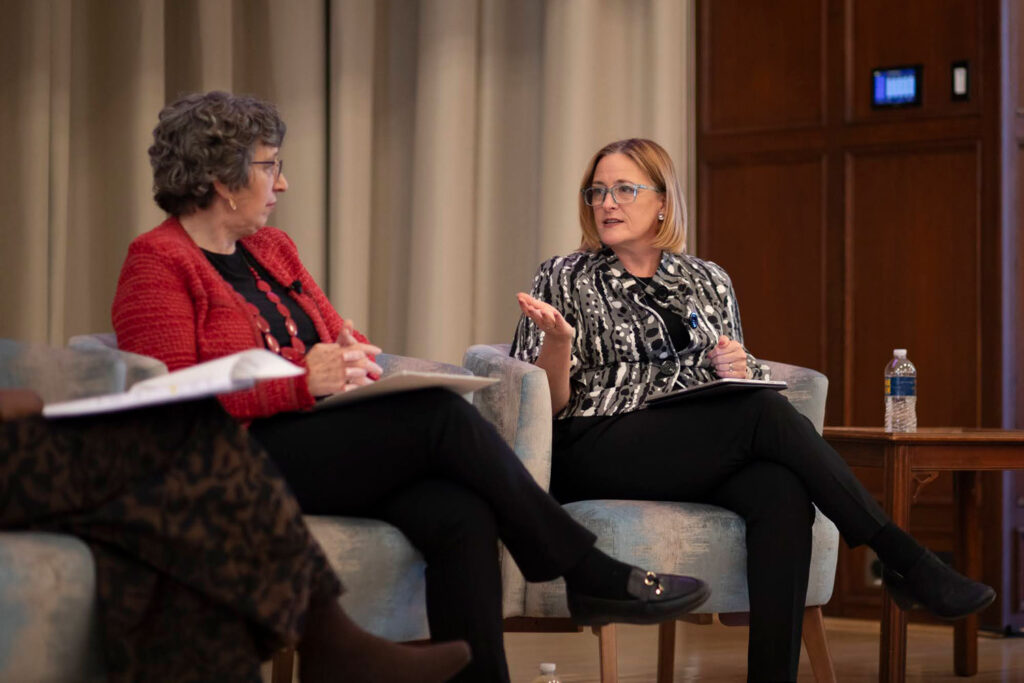
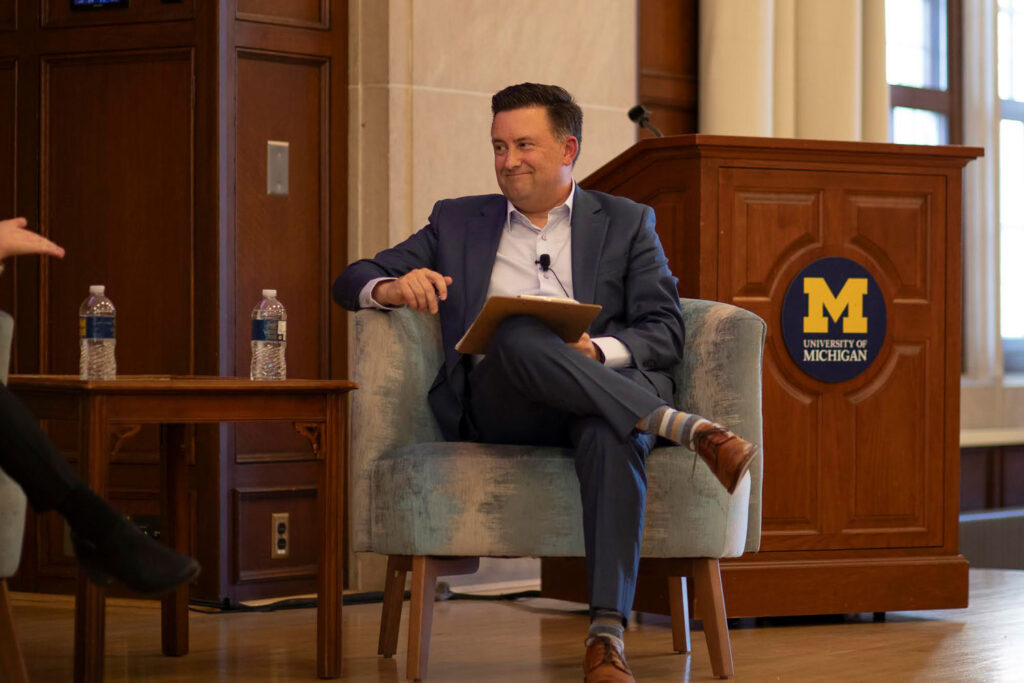
The Innovation Insights event, featuring current and former presidents and provosts – all with ties to the University of Michigan – gathered on Nov. 13 in the Michigan Union’s Rogel Ballroom for a discussion on the challenges and opportunities universities face with AI. Joining moderator James DeVaney, founding executive director of the Center for Academic Innovation and associate vice provost for academic innovation, were Amy Dittmar, Howard R. Hughes provost and executive vice president for academic affairs at Rice University; Martha Pollack, president emerita at Cornell University; and Lynn Perry Wooten, president of Simmons University.
“Our goal here this afternoon isn’t to debate the latest AI tool or trend, but to explore something deeper together,” DeVaney said. “How the purpose of higher education is evolving, how processes of teaching, learning, and research are already changing, and how leaders can help universities navigate transformation while remaining true to their mission.”
With deep and diverse experiences, the panelists shared a variety of opinions on the intersection of AI and higher education. They all agreed that this is a time of reinvention for universities, which need to lead the conversation.
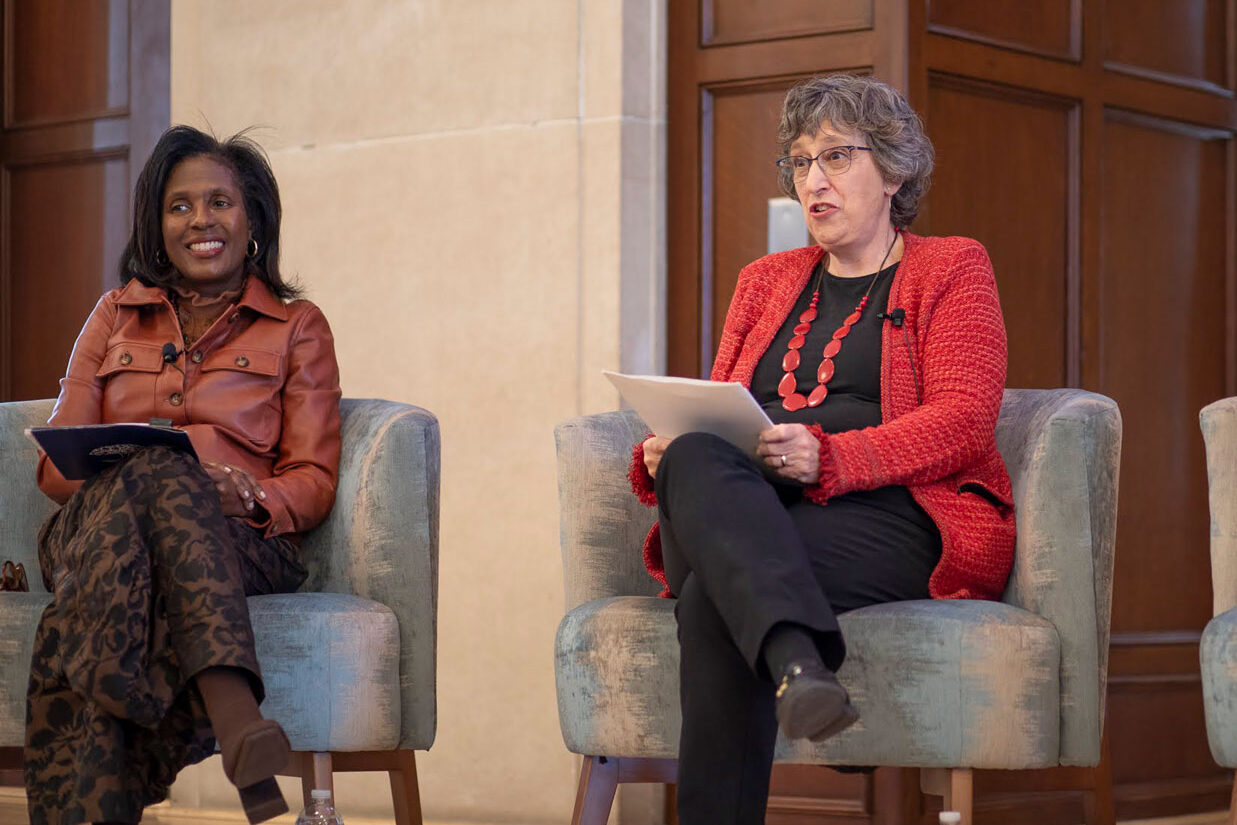
Pollack read a quote from Socrates, who worried about the threat writing would have on collective knowledge and memory. She equated it to the hand-wringing she’s observed over the potential negative impact of AI on education.
“I think AI is the same – it’s going to impact, but not obviate, the need for higher education,” said Pollack, who served as dean of the U-M School of Information as well as provost and executive vice president of academic affairs from 2013-17. “I think universities are the perfect place to address both the risks and the opportunities.”
Dittmar, who was a longtime U-M faculty member and served as senior vice provost from 2016-22, believes it’s incumbent upon universities to see those opportunities while not ignoring the responsibility to best serve their communities.
“We have to have our eyes wide open,” she said. “As we do that, it’s really important to think about the humanity that’s in it; what AI can do, what it can’t do, and what we as humans can do.”
Centering the human experience has also guided Wooten, who manages limited capacity and resources at a university with an enrollment of under 7,000 students, to find the most efficient ways to implement AI while staying aligned to her university’s purpose.
“I think all of us have this mission of creating knowledge, but when we think about what we do for our students in particular, I’m always asking myself, does it advance our mission to educate students for their life’s work?” said Wooten, who spent nearly 20 years on the faculty at Ross School of Business and served as the senior associate dean for student and academic excellence.
Wooten added that it’s important for university leaders to also embrace AI in their own work and emphasized the need for shared ownership, which includes partnering with external stakeholders.
“So with AI, if we’re going to be excellent at higher education, we’re going to need other universities, we need nonprofits, we need the government, we need corporations,” Wooten said.
Faculty buy-in was also a key piece of the vision discussed. Dittmar emphasized the need to be “comfortable with the uncomfortable,” encouraging instructors and staff to learn, share best practices, and take the lead in identifying solutions to the challenges ahead.
“That’s what we as institutions have to do, that’s what we as faculty have to do, that’s what we as staff have to do,” Dittmar said. “We have to lean into this because if we don’t, it’s going to get defined for us.”
Read James DeVaney’s five main takeaways from the conversation in his Inside Higher Ed piece.