Creating life-changing learning innovations through faculty partnerships
Mindy Arbaugh, Content Specialist
Pathways to better learning, both figurative and literal, guided guests through an informative and interactive afternoon at the 2026 Online Learning Showcase, hosted by the Center for Academic Innovation.
University of Michigan faculty, staff, and students began their journey with a presentation about the center’s work to expand and reinforce those pathways through new online learning experiences, external partnerships, and an improved Michigan Online experience.
Sarah Dysart, the center’s chief learning officer, highlighted the growing catalog of non-credit and for-credit offerings found on Michigan Online, such as the online graduate certificate from the School of Environment and Sustainability, alongside Campus Hubs and custom learning solutions for employers. All of the center’s initiatives tied back to the goal of growing lifelong learning relationships between the university’s instructors and the learners they serve.
“The more we can have direct access to those learners, the more we will understand what they’re looking for and how we can support them in finding the experience that’s right for them,” Dysart said. “Our aspiration is that they will continue to see Michigan as a place they can come back to gain a new skill or explore the next learning experience that will support their professional and personal growth.”
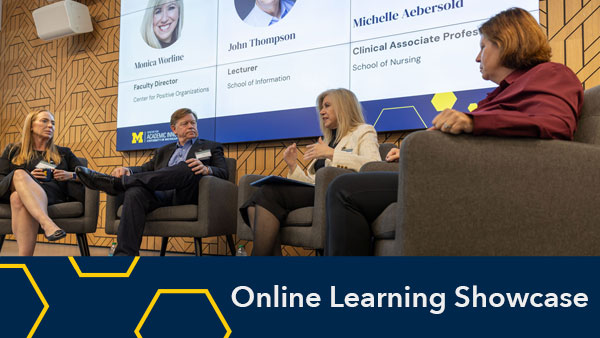
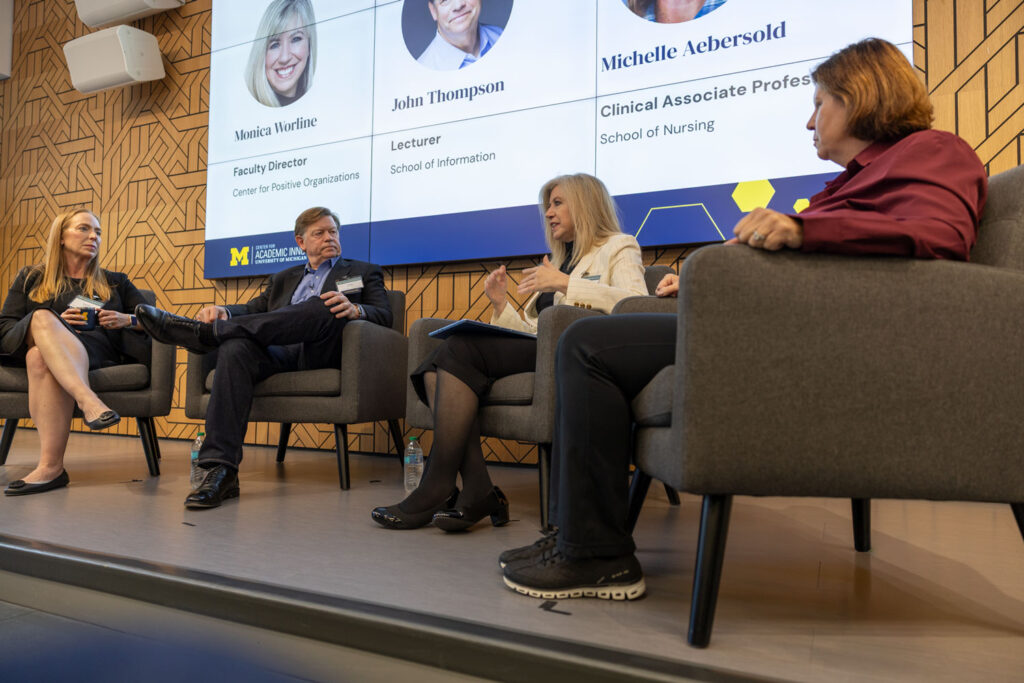
Three of those faculty partners — John Thompson, the center’s Innovator in Residence Fellow for 2026, Monica Worline, faculty director at the Center for Positive Organizations, and Michelle Aebersold, clinical associate professor at the School of Nursing — joined Dysart for a panel discussion on how their upcoming projects serve learners.
Worline is working with the center to adapt her online course, Generative Leadership: Inspiring Adaptability in an AI World, into a non-credit certificate program that combines self-paced online learning with live interactive activities. The prospect of adding live experience with online learners engaged in professional development excited Worline because it incorporates a human element that’s often missing from organizational innovation and upskilling.
“It gives learners the opportunity to ask questions and think about how these concepts live in their own environment, and to push back on some of the assumptions and challenge the material in a different way,” Worline said. “By adding the live component to the course, we’re actually walking our talks, right? We’re adding a chance for human connection.”
Connection was also a driver for Aebersold, who, early in her teaching career, saw how simulations connected learners to a deeper education through hands-on experiences. That led Aebersold to develop extended reality activities, culminating in a simulated Mount Everest expedition as part of the course series Leadership for Healthcare Professionals. Her next project with the center is to bring those lessons and learning experiences to a non-credit certificate program available to online learners everywhere.
“My philosophy has always been that people learn by doing,” said Aebersold. “I’ve been able to bring that to life in a way that goes beyond the walls, beyond our School of Nursing, and beyond our classrooms.”
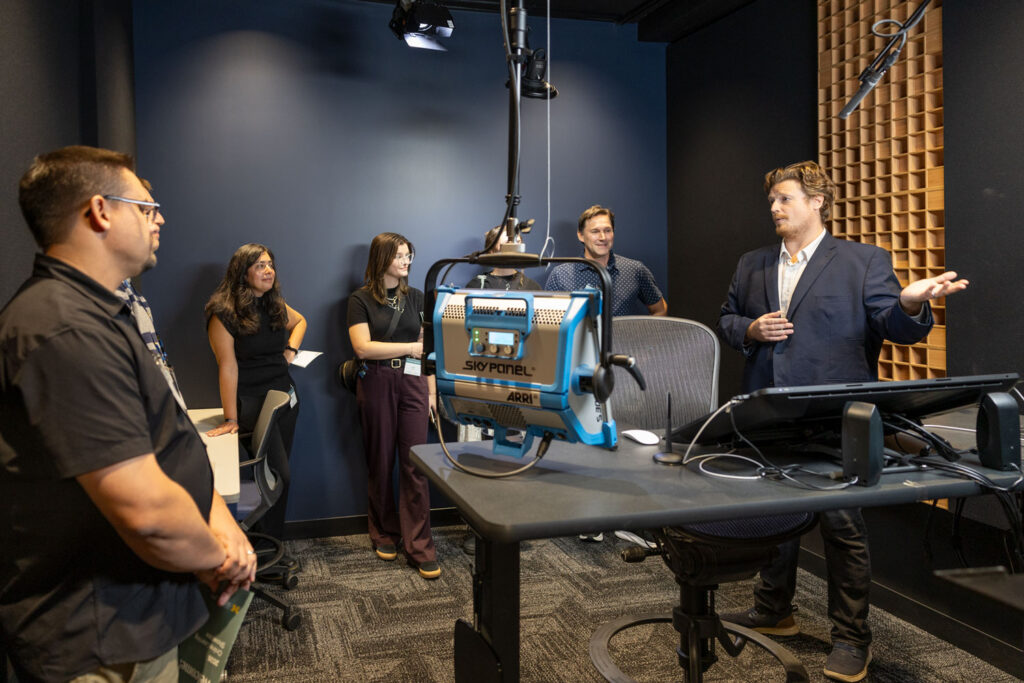
After the roundtable, attendees were able to pursue their own path through the center, following designated tracks to meet the teams working on enhancing and innovating the online learning experience. Stations throughout the building offered insight on portfolio strategy, the Michigan Online ecosystem, designing online learning experiences, and other innovations in online teaching and learning.
Demet Kayabasi, a PhD candidate in the Department of Linguistics and staff assistant at the Rackham Graduate School, attended the showcase to understand more about the center’s work. She’s taken a few online courses via Michigan Online, including a learning experience design course and the Google Career Certificates project management program.
Kayabasi applied these skills to developing online workshops and courses for her departments. After circulating through some of the stations, Kayabasi said she was excited to bring ideas and opportunities back to her colleagues, including the center’s current call for proposals for new online learning initiatives.
“I’ll definitely pitch that to my department,” she said. “I want to explore more about online teaching and learning opportunities at U-M, and also what can we do better and what resources are available for our existing courses.”