Briana Johnson, Marketing Copywriter
On March 17, 2026, I had the opportunity to attend the AI and the Future of Learning Summit, where voices from across education and technology were discussing the future of higher education in the wake of AI. As a marketing copywriter in higher ed, I entered the event like many other young professionals, wondering what the future of roles like mine will look like in the era of AI. I entered the space with an open mind to understanding exactly how leaders are looking to the future of higher education during the age of AI.
For an event solely focused on AI and the future of learning, many would be surprised by how little of the conversation focused on tool integration. Industry leaders discussed the importance of discernment, students advocated for consensus between faculty to drive technological change in the classroom, and university administrators emphasized the need to lead with institutional values amid technological change.
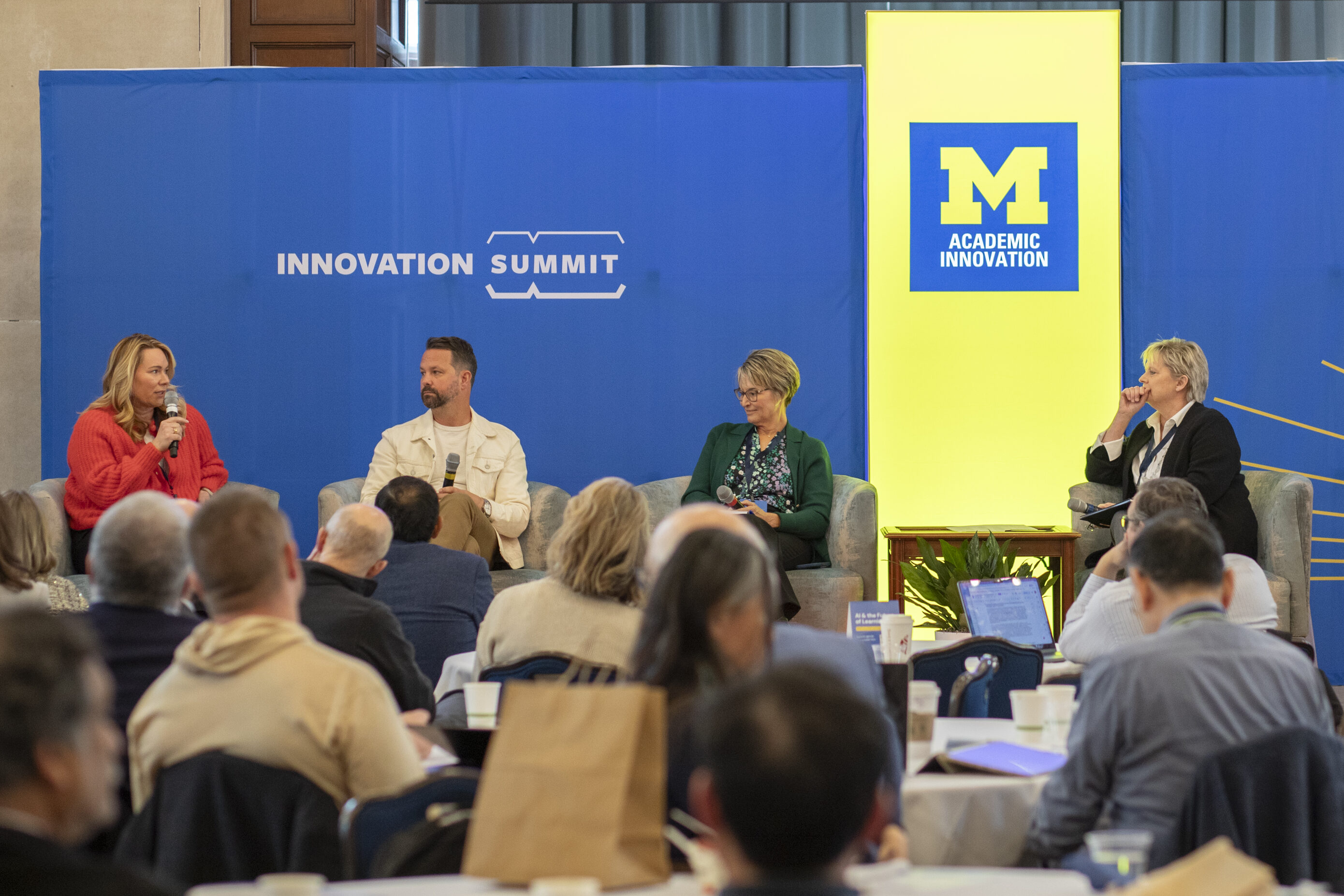
So, yes, the summit, hosted by the University of Michigan Center for Academic Innovation, was primarily about AI, but it also highlighted all the feelings, experiences, and emotions that come with it: the anxiety, the awe, and everything in between.
Here are the top four themes I took away from this thought-provoking day of conversation.
1. Visiting the Past Before Fearing the Future
The printing press. Computers. Electricity. Innovations we don’t think twice about were once a full-time job for someone. But as we’ve seen, when technology evolves, fears about its impact on the workforce are close to follow.
It’s true that there’s been a massive boom in technology over the past few decades; AI’s proliferation might have been one of the quickest in recent memory. There are very few institutions, academic and workforce alike, that are not trying to find ways to integrate AI. That escalation is making people nervous about the future: Will certain degrees hold the same value? Will my kid be able to find a job? Will the AI bubble pop?
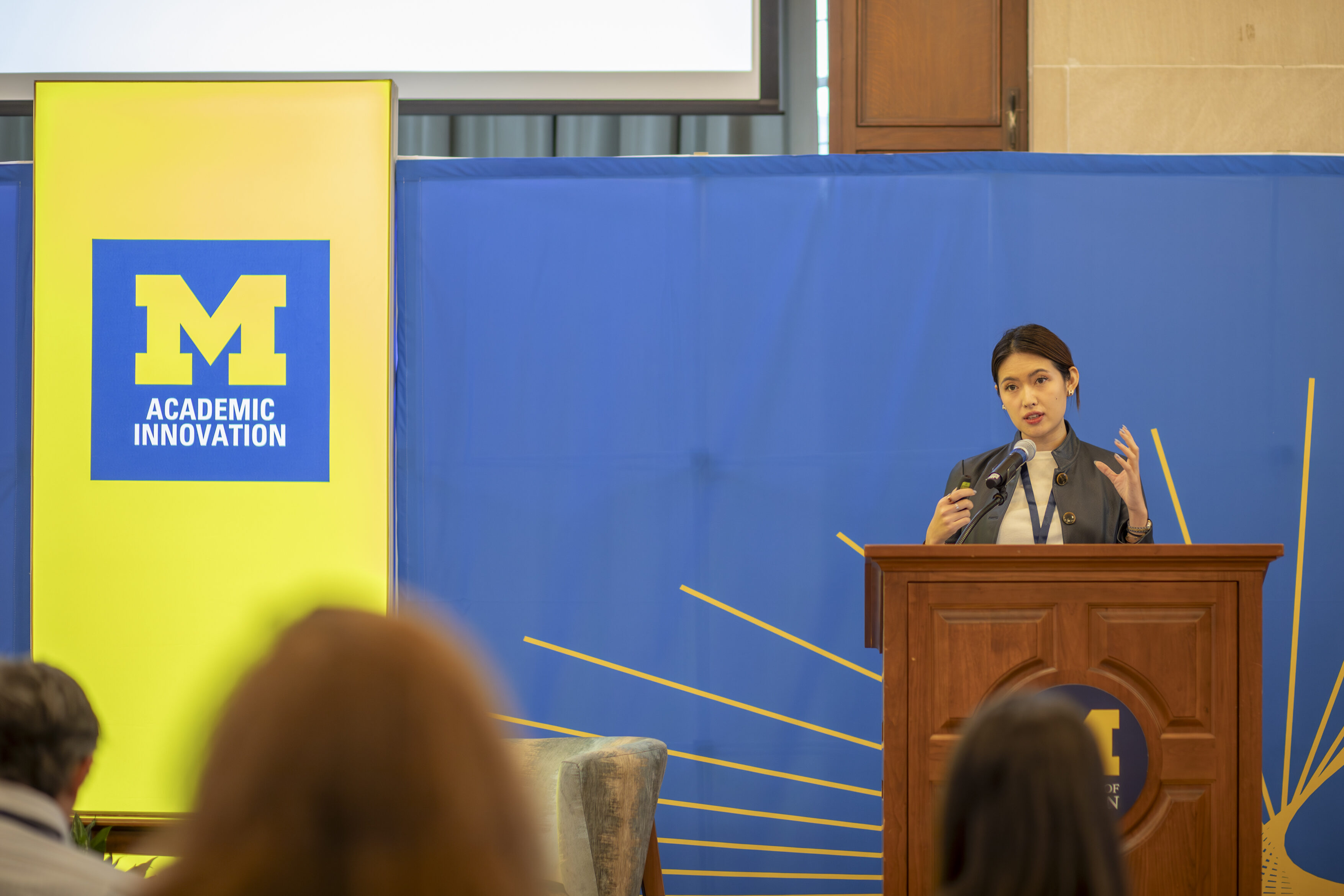
Many of the summit’s speakers noted how looking to the past can signal AI’s future. AI isn’t positioned to reinvent the wheel, but rather to enhance the processes we currently employ. Leaders from across industries pointed to technological changes over the past hundreds of years, in which jobs of the day became the tasks of tomorrow. Claire Zau, partner and AI lead at GSV Ventures, noted that AI seems destined to follow the pattern of previous industrial revolutions, such as the internet or electricity, and that wherever significant value is created, market speculation and rapid adoption inevitably follow.
This change in mindset can help us rethink how we’re approaching discussions about AI as a technological advancement that streamlines processes, reshapes how we learn, and supports underserved communities.
2. Curricula and Partnerships Build Stronger Pipelines to the Workforce
So, AI’s here to stay (at least in its current state). Then how do we prepare students for the future of work with this in mind? Several speakers on the second panel of the day, “Exploring Readiness for the Future of Work,” emphasized that the modern workforce demands extreme agility, requiring institutions to quickly pivot their curricula to keep pace with technological shifts. Panelists and individual speakers alike stressed the importance of institutions looking to the market and integrating skills into their curricula that adapt to technological change, as well as understanding how to monitor trends using tangible data points and insights.
To make that possible, speakers suggested institutions across higher ed should explore partnerships with companies, vocational schools, and community organizations to build sustainable pipelines that enable students to enter the workforce with career-ready skills. They also encouraged these relationships to be reciprocal: organizations making headway in AI spaces can provide valuable insights into industry skills that students can learn from.

Relationships became a central theme in Chris Parrish’s lightning talk, framed around the growing competitiveness of internships, where demand easily outpaces supply. Parrish runs Podium Education, a company that partners with universities to help students close skill gaps. His suggestions included offering credit for internships and apprenticeship programs, or partnering with companies that allow students to gain expertise in many roles and skills so they can decide on a pathway that aligns with their goals.
An added bonus? Students from backgrounds with smaller networks now have the opportunity to enter spaces that they may have been excluded from. Even with the added pressure of AI on students entering the job market, classrooms that offer the scaffolding and knowledge to navigate these experiences can only serve their constituents in the long run.
By building AI literacy, students will be more likely to use tools like ChatGPT and Claude as learning partners, rather than shortcuts. In addition to literacy building, Zau encouraged institutions to adopt models that allow all students, regardless of financial status, to access paid versions of AI tools. By providing both literacy and access to AI across majors, departments, and interests, institutions can ensure equitable AI use among all students.
3. Openness is Key…But Don’t Lose Discernment
Another big talking point throughout the summit was balancing openness to what opportunities AI creates with the discernment needed to ensure the quality of AI’s output remains open to critique.
In his opening remarks, James DeVaney, the center’s founding executive director and the vice provost for academic innovation, frequently emphasized the importance of human judgment in new technologies. Leaders like Stephanie Khurana, CEO of Axim Collaborative, urged faculty to take the lead in redefining core competencies, suggesting that educators must first understand how students use adaptive learning before deciding which subjects remain essential to teach.
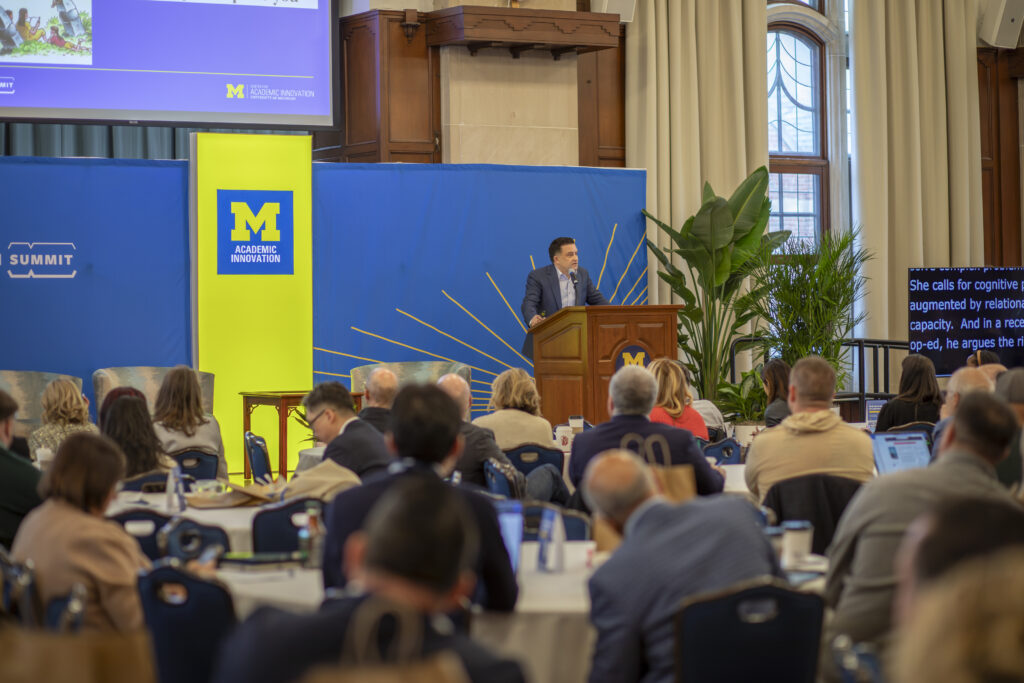
It was a resounding message: now is the time for higher education to rethink how it’s approaching the classroom. In a time where students today have experienced a bounty of disruptions—a pandemic, wars, the rise of AI, increased isolation and loneliness, and beyond— higher education has the opportunity to create scaffolding that allows students to think deeply about how they’re using new technologies, building their literacy in the tools, instead of leaving them to fend for themselves. During the student panel, all three speakers called on professors and instructors to teach students how to use these tools properly, enabling them to explore new learning pathways that are not readily available to them.
4. Building Trust, Resilience, and Community in the Face of AI
But one of the most impactful messages that came out of the summit was overwhelmingly human: a focus on supporting each other, building trust, and developing a sense of community despite the uncertainty.
Touching on how healthcare is using AI to enhance patient outcomes, Microsoft’s David Rhew, MD, explained that AI integration in healthcare must prioritize rigorous evaluation and compatible workflows to maintain the fundamental trust that defines the patient-provider relationship. This was another key theme throughout the day: speakers stressed the importance of augmenting roles with AI — not replacing human touch entirely. Speakers encouraged universities to get ahead of the curve, building not just pathways, but ultimately trust with their constituents.
Now more than ever, universities need to seize the moment to help shape a future in which AI and higher education are unified, not pitted against each other. To move through disruption and focus on the importance of building community.