Sean Corp, Communications Lead
The Center for Academic Innovation has spent more than a decade investing in innovative technologies, bold experiments, and online course development. Our goal from the beginning has been to explore what it means to support life-changing education for students at the University of Michigan and learners worldwide.
In 2025, the center embarked on its most ambitious year yet so that the next decade can be bolder, the impacts greater, and the global Michigan learning community can continue to grow.
The center focused on strategic investments in campus infrastructure, deeper conversations about the impacts of artificial intelligence and other innovative technologies on teaching and learning, and helping faculty innovators and U-M’s schools and colleges create new flexible pathways to lifelong learning that professionals need to thrive in today’s workplace.
Supporting Lifelong Learning
Bringing Life-Changing Education to U-M Community, Global Learners
As technology advancements make clear the increasing need for education and upskilling beyond graduation, the Center for Academic Innovation and Google partnered to offer the entire U-M community free access to life-changing educational opportunities, providing professional, in-demand training from Google experts through Michigan Online.
Through the partnership, Michigan’s current students, faculty, staff, and alumni of all three campuses can access Google Career Certificates and Google Essentials courses at no cost.
Google’s certificate and essentials courses cover training in a variety of in-demand skills, including artificial intelligence tools, data analytics, information technology, digital marketing, project management, user experience design, and cybersecurity.
More than 827,000 new people joined the Michigan Online learning community in 2025, and there were more than 1.5 million course enrollments last year. In total, Michigan Online surpassed 21 million enrollments from more than 12.4 million unique learners. In 2025, the center added 15 courses to its catalog of more than 300 unique learning opportunities, all developed in partnership with U-M faculty. New courses cover topics such as Python programming, artificial intelligence skills, and leadership for healthcare professionals.
Improving Accessibility
As the center considered what it would mean to grow and impact online education over the next decade, it moved to review, rethink, and rebuild past courses. It required an intensive three-part effort that encompassed accessibility remediation across the portfolio of more than 300 Michigan Online courses, replicating 125 courses in Canvas to better serve learners in a more flexible learning platform, and exploring optimization strategies to test design changes that could improve learning outcomes.
With an April 2024 deadline to meet new federal standards, the center is working to improve the accessibility of its materials and is also sharing resources on campus with other units that are updating their content. The center hosted a community of practice on accessibility to bring together representatives from throughout the University of Michigan to discuss the tools, processes, and protocols people are using to facilitate remediation of material to meet the required WCAG 2.1, Level AA guidelines. The center is also sharing its expertise on its Online Teaching website, with several articles on accessibility.
Supporting Degree Program Reach and Innovation
Two schools partnered with the center to launch their first online degree programs in 2025, joining other units that have previously created online degree programs with the center, including the schools of Social Work, Information, Public Health, and the Medical School. The Ford School of Public Policy created the Online Master of Public Affairs, the school’s first graduate degree program specifically created for online learners. The Marsal Family School of Education offered its own online master’s degree program. The Master of Arts in Leading Educational Innovation and Transformation offers a rigorous and comprehensive online program that prepares graduates to become effective leaders and advocates in education. Not only are the programs exemplary, but both schools exceeded their first cohort enrollment goals by more than 25%.
Harnessing Advanced Technologies in Teaching and Learning
Community Conversations About AI
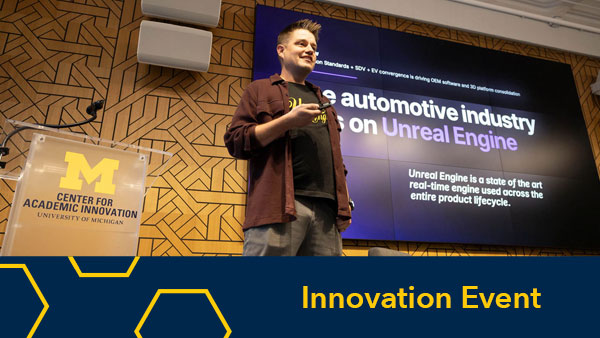
Artificial intelligence tools remained among the hottest topics in higher education in 2025, and the center hosted several opportunities for the innovation community to come together and discuss the challenges and opportunities this technology presents.
Lisa Gevelber, founder of Grow with Google, discussed university and industry partnerships to empower lifelong learners at the center’s Online Learning Showcase. The showcase also shone a light on the design of online learning, and the many forms it can take, while also creating space to discuss what it means to push the boundaries of traditional education. Center staff connected with faculty on how they work closely with campus partners to design open online courses, stackable pathways into degree programs, and hybrid and online degree programs.
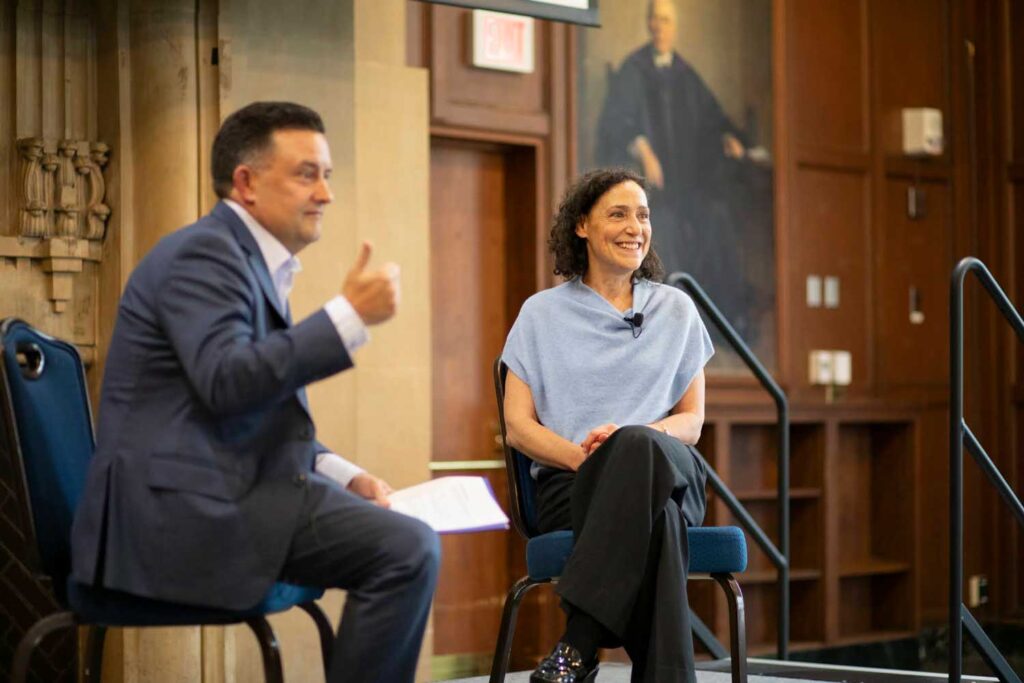
The center also hosted U-M leaders and faculty from across campus to listen to a keynote conversation about AI in education. The center’s keynote panel event featured three distinguished university leaders from around the U.S., all with U-M ties, who came together to explore the necessity of higher education leading the conversations around artificial intelligence in education.
Both the Research & Analytics Showcase and the center’s Student Fellows presented work on building and researching modern digital learning environments, exploring innovative technologies, and designing accessible experiences at scale.

XR Takes Learners to New Heights
Online learning doesn’t have to be confined to lectures, with faculty on one side of the screen and the learner on the other. Immersive learning is about creating opportunities to transport learners to places and times they’ve never been, allowing them to understand course material in new ways. The center’s extended reality stage allows faculty to create courses that truly transport learners, and 2025 saw the release of two ambitious examples.
The Black Performance as Social Protest open online course received an XR-enhanced section that culminates in a nine-minute musical film, taking learners through Black performance across the decades. It shows empowerment and resistance, from sharecropping fields, a Baptist church, the Edmund Pettus Bridge, to Black Lives Matter protests.
Leadership training comes in many forms, but the team that created Leadership for Healthcare Professionals thought big – Mount Everest big. The Leadership for Healthcare Professionals series features multiple immersive activities designed to teach critical thinking, effective communication, and quality improvement to healthcare workers who want to grow their leadership skills. That includes an immersive scenario that asks you to navigate tough decisions under stress as a group scales Mount Everest.
AI Resources for Innovative Teaching
The Center for Academic Innovation created several new resources available on Online Teaching, designed to provide instructors and course designers with information on exploring innovative practices. We explored the metacognitive process and AI, how to build a GenAI-resilient course, and how to use AI to write effective prompts for multiple-choice questions.
Accelerating EdTech Experimentation
From Incubator to Accelerator
The Center for Academic Innovation is focusing its energies on ways to more nimbly help the university evaluate, pilot, and adapt emerging technologies like AI and extended reality into online learning. This shift reflects the rapid pace of technological change and the ability to partner with industry to harness the potential of existing tools into impactful teaching and learning solutions.
It was also a year of milestones for the center’s portfolio of homegrown tools and educational technology software.
Atlas Enters Its Next Era
Atlas is used by 99% of undergraduate students at the University of Michigan’s Ann Arbor campus. It allows students to chart their own academic path and is essential to course discovery and registration. Atlas reached significant milestones in 2025, including a new collaboration with the Dearborn campus to bring the technology to its students and faculty.
In addition, the Office of the Vice Provost for Undergraduate Education joined our partnership with the Office of the Registrar, Information Technology Services, and faculty innovator Gus Evrard to chart the path for new Atlas feature development.
Tools Graduate from CAI
This year, several digital tools developed at the Center for Academic Innovation reached a milestone. Co-created with faculty to address real teaching and learning challenges, tools such as ECoach, Lettersmith, and Problem Roulette transitioned to LSA to serve students into the future.
Student Fellows Get Unique Professional Experience
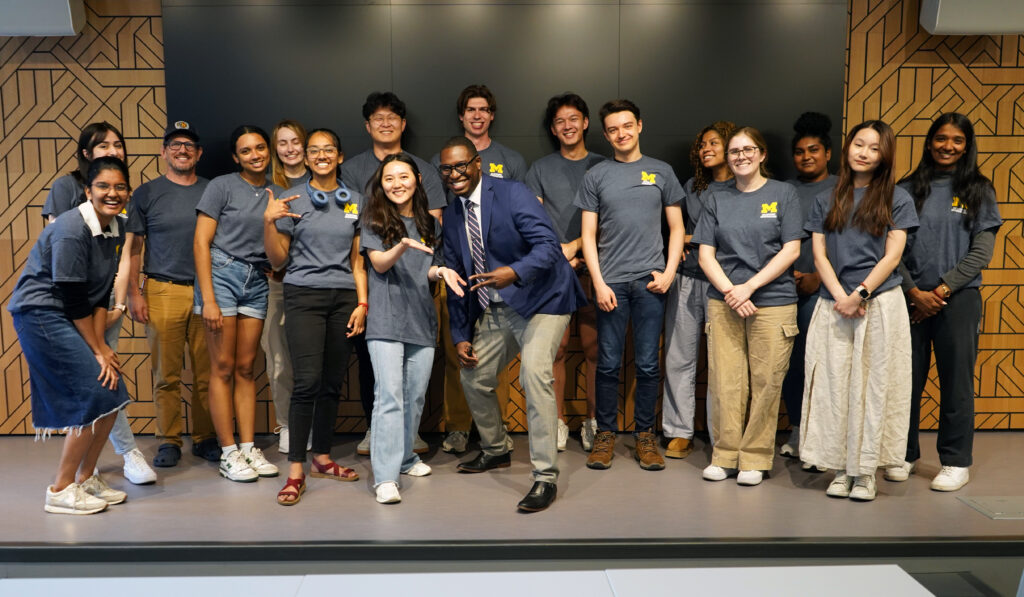
The Student Fellowship program at the center remains an important resource for center staff building the future of learning, and a stepping stone to undergraduate and graduate students exploring multiple career paths. In 2025, the center had 87 students in the fellowship program. These students come to the center from throughout U-M. Of the 10 schools and colleges that the center’s Student Fellows called home in 2025, the most prolific were the College of LSA, the School of Information, Michigan Engineering, and the Marsal Family School of Education. The center also employed three students from the Washtenaw County Summer Works program who hailed from Washtenaw Community College, Eastern Michigan University, and Michigan State University.
As we look to the new year ahead, 2025 stands as a defining year. It strengthened the foundation for the next decade of bold experimentation, meaningful partnerships, and life-changing education. We are grateful to all those who collaborated with us and helped us build toward a future in which education connects and empowers learners everywhere to reach their full potential throughout their lives.